Kino Pilgrimages - The Camino de Kino
Magdalena de Kino
Misison San Xavier del Bac
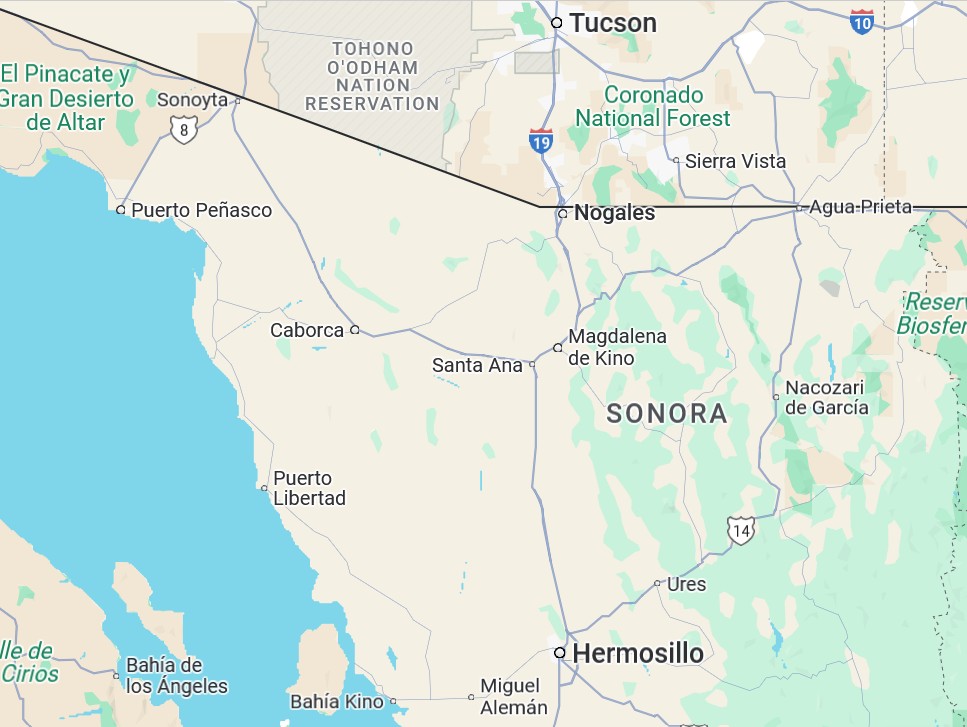
Magdalena de Kino and
Mission San Xavier del Bac, Tucson
On The Camino de Kino
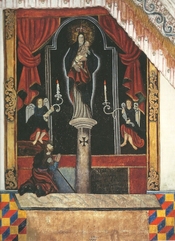
Santa María del Pilar & Santiago
Mural - West Transcept
Mission San Xavier del Bac
Major Page Sections Links
Heritage Section Page Links
Website Page Links
- 'Home Page
- 'Page Index
- Best Concise Biography
- Best Book El mejor libro sobre Kino
- Best Book Entire Online English
- Best Book Guide Section Page
- Best Book Reference Map & Timeline Links
- Best Book^ Online Table of Contents
- Best Book^ C01 California Mission
- Best Book^ C02 Indians Not Slaves!
- Best Book^ C03 Among The Pimas
- Best Book^ C04 Young Lieutenant
- Best Book^ C05 Blood of a Martyr
- Best Book^ C06 Vengeance!
- Best Book^ C07 Children Ask For Bread
- Best Book^ C08 Error in the Map
- Best Book^ C09 Devil's Highway
- Best Book^ C10 Visit from Salvatierra
- Best Book^ C11 Plan for New Spain
- Best Book^ C12 General Manje Writes Report
- Best Book^ C13 Francis Xavier Chapel
- Best Book^ C14 Best Book Index
- Best Book^ C15 Author Bio & Note
- Biografía de Eusebio Francisco Kino
- Biografia di Eusebio Francisco Kino
- Biography of Eusebio Francisco Kino
- Builder Architect
- Cabalgata Rides 01
- Cabalgata Rides 02
- Cabalgatas Section Page
- California Builder
- California Founder
- Cartographer
- Cross References To Books
- El romance del Padre Kino Book
- Europe Son
- Expanded Table of Contents
- Explorer
- Explorer Baja California Gulf of California
- Explorer Colorado River and Delta
- Explorer Pinacate & Gran Desierto
- Explorer Sonora Arizona
- Farmer Rancher
- Favores Celestiales Bolton
- Friend and Defender
- Grave Discovery Chapel
- Grave Discovery History
- Grave Discovery Olvera Account
- Historian
- Horseman
- Jesuit Exemplar
- Jesuits on the Pacific Bolton
- Kino Biography
- Kino Heritage
- Kino Life
- Kino Life Summary Maps
- Kino Resources
- Kino Wheat
- Letters To Duchess Aveiro
- Literature Bibliography
- Magdalena de Kino - Trails End
- Magdalena Pilgrimage
- Mission San Xavier del Bac Statue Guide
- Missionary Father
- Multimedia Online
- National Parks and Heritage Areas
- O'odham People
- Pageant Play "Bell and Plow"
- Remembrances on the Trail
- Ride for Justice History
- Ride for Justice Journeys
- Sainthood Cause
- San Cayetano Tumacacori
- San Xavier del Bac
- Scientist
- Segno - Birthplace
- Sor Juana's Kino Poem
- Sortillion^ C01 El Joven Kino
- Sortillon Kino Website
- Statues Monuments
- Test Page
- Testimonials
- Timeline
- Tumacacori
- U.S. Capitol Statue Section
- U.S. Statue Burrus Dedication
- U.S. Statue Hayden Acceptance
- U.S. Statue Silver-Cruys Sculptor
- U.S. Statue Udall Interior Secretary
- U.S. Statute Goddard Presentation
- U.S. Statute Green Invocation
- Website Page Index Annotated
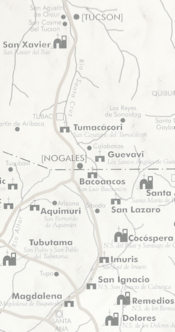
Camino de Kino
Magdalena Pilgrimage
September - October
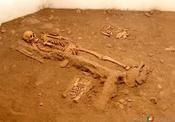
Kino Skeletal Remains Displayed
Kino Masoluem, Magdalena
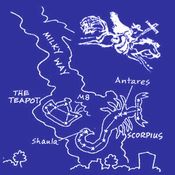
On the Camino de Kino
Pilgrims Guided South by Milky Way
to Magdalena Festival
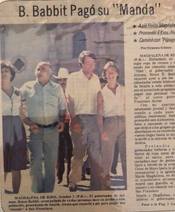
Arizona Governor Bruce Babbit
and his ife Hattie Babbit
completing their pilgrimage
beginning from Imuris, Sonora

Plan Pilgrimage to Magdalena
Get Passport
The O'odham Runner Newspaper 2015
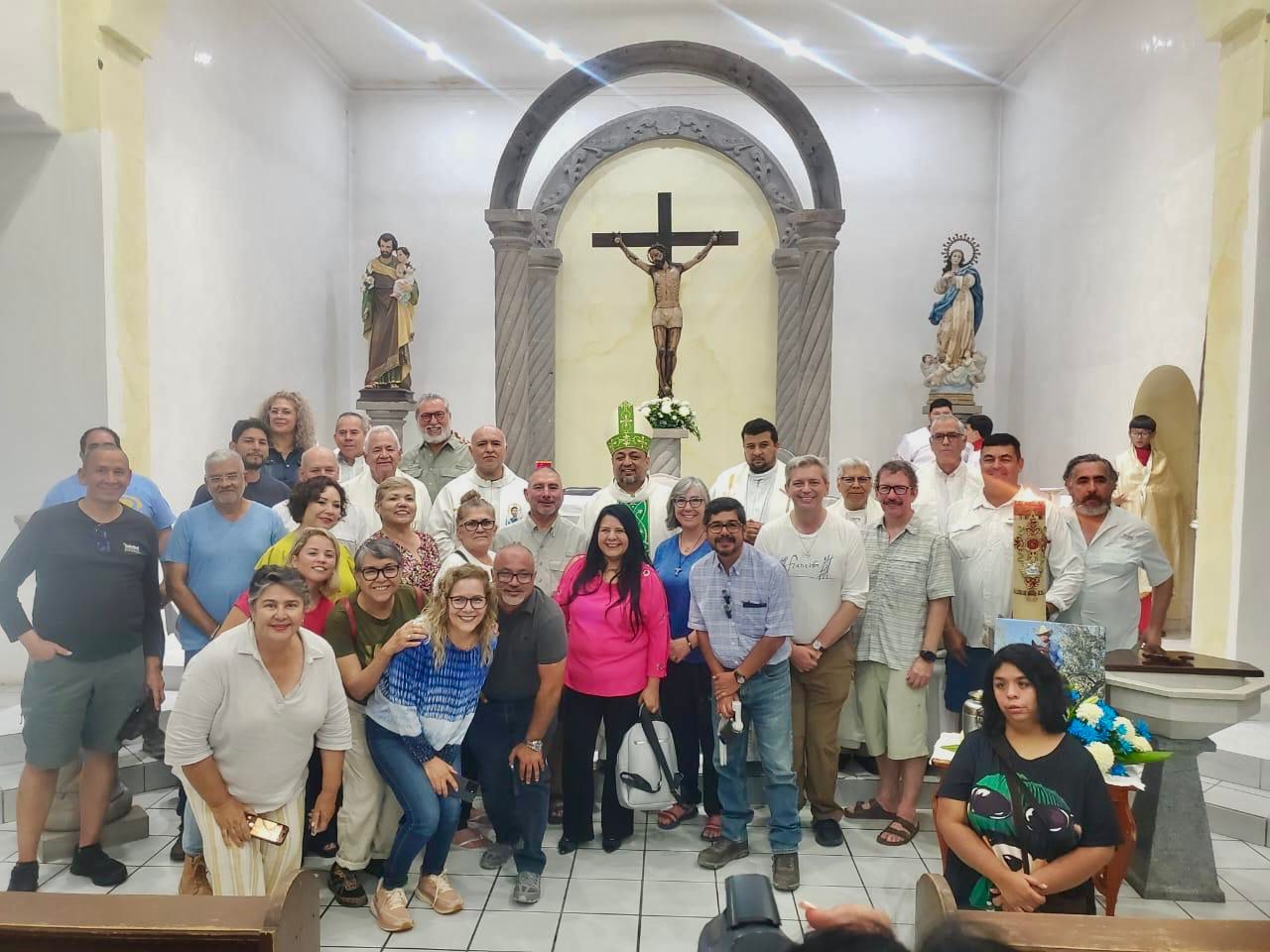
Nogales Bishop José Luis Cerra Luna and Vounteers Greet Pilgrims in Ímuris
See Magdalena Pilgrimage Reflections
CORRESPONDING SUBJECT PAGE LINK: Click on the link to the corresponding subject page about the town of Magdalena de Kino at http://padrekino.com/index.php/khs_home/kino-heritage/magdalena-de-kino-sonora
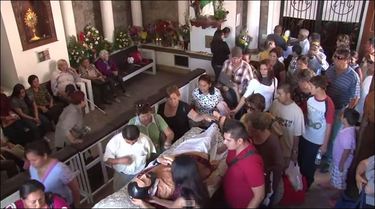
Pilgrims at Reclining Statue of St. Francis Xavier
Magdalena de Kino, Sonora
Magdalena Pilgrimage
Living Tribute to Kino
Although Padre Kino died more than two centuries ago, he never has been forgotten by the descendants of the Indians whom he served. To this day they pay homage. They journey on foot, by horseback, and in wagons from Arizona's Papago and Pima Indian Reservations, and from Sonora's far-flung communities to Magdalena each October to pay him homage. Volumes have been written in praise of the great missionary, historian, ranchman, explorer and mission builder, but no tribute is so eloquent as that annual trek of the Indians whose ancestors first heard The Word of the white man's God and His Disciples from Kino's lips and who had their first contact with the Old World's civilization through him.
Bernice Cosulich
"Tucson" 1953
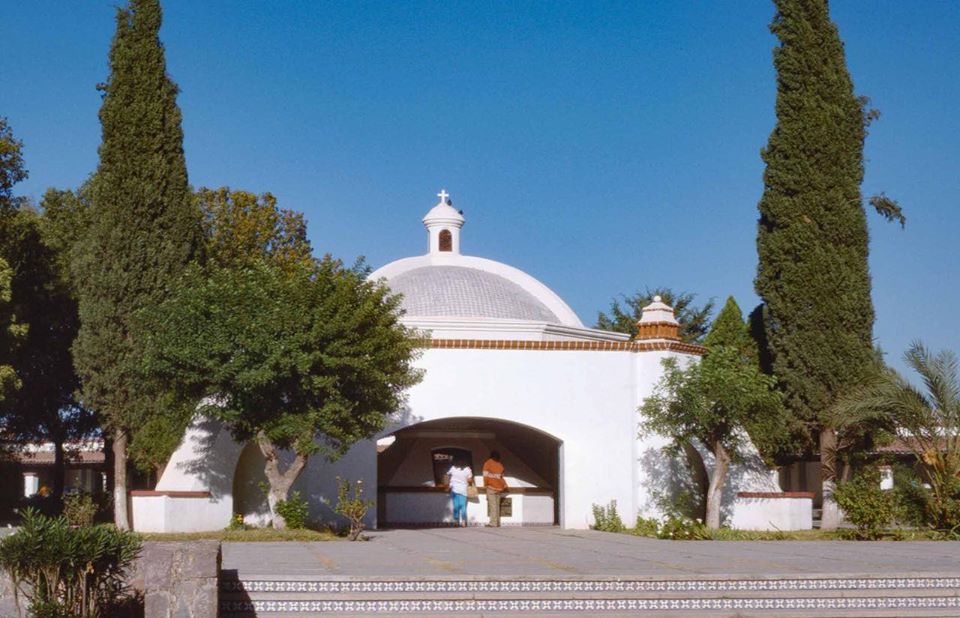
Site of Eusebio Francisco Kino's Grave
Kino Masoleum Magdalena Sonora
National Monument of Mexico
Pilgrimage To Magdalena and Padre Kino
James S. ("Big Jim") Griffith
The religious fiesta held every October 4 in Magdalena de Kino is by far the most important pilgrimage event in the Sonoran Desert. It attracts thousands of people to the old mission town. Many walk sixty or a hundred miles as an act of devotion to the saint.
In order to understand it, we must know a little history. Father Kino, who did so much to open this region to European evangelism and settlement died in 1711 and was buried in Magdalena, some sixty miles south of the present international border. His patron saint, and the patron of missionaries in general, was Saint Francis Xavier, a remarkable sixteenth-century Jesuit who did intensive missionary work in both Japan and India, died off the coast of China in 1552, and found his last resting place in the then Portuguese colony of Goa on the east coast of India. His body was preserved in lime for his final journey. That it arrived and remained in excellent condition was a sign to some of St. Francis's followers of his intensely spiritual nature. For this reason, one of the standard representations of this saint is as a corpse reclining and dressed in a cassock or vestments. Such a statue is the focus of pilgrimages to Magdalena.
However, San Francisco has undergone some remarkable transformations in northern Sonora. In the first place, many of those who attend the annual fiesta held in his name now feel San Francisco and Father Kino to be one and the same. Both, after all, were famous missionaries; both are dead. Why shouldn't the statue of the dead man in the church be a representation of the dead man whose bones have been on public view in the middle of the plaza since 1966, where Father Kino's grave was discovered and opened? As a result of this discovery, which followed an intensive investigation sponsored by the Mexican government, Magdalena was officially renamed Magdalena de Kino. In addition, a small dome was built over Father Kino's excavated grave, which is on permanent view in the plaza renovated in his honor.
Nor is that the only way in which Magdalena's cult of San Francisco is unusual. While the feast of Saint Francis Xavier in the Catholic calendar is December 3, the fiesta in Magdalena is celebrated on October 4, the feast day of Saint Francis of Assisi. This further confusion is probably a result of the historical fact that in 1767 the Jesuit order, of which Father Kino was a member, was expelled from all the Spanish dominions and was replaced in northern Sonora by the Franciscans. The members of this totally different organization had as their patron saint another Francis - Saint Francis of Assisi. The ensuing confusion in the dates of the Magdalena fiesta is easy to understand.
These details matter little to the thousands of pilgrims who flock to Magdalena each year, visiting their saint and then engaging in the sort of social and economic activity that calls to pilgrims - and secular tourists as well - the world around. They buy souvenirs, eat, drink, and listen to strolling musicians, and generally cap their religious journey with a thoroughly secular good time. The Fiesta de San Francisco in Magdalena is one of those occasions when the traditional cultures of the region are at their most visible, when the region's history is at its most accessible.
Dr. James S. ("Big Jim") Griffith
"Legends and Religious Arts of Magdalena de Kino"
"Southern Arizona Folk Arts"
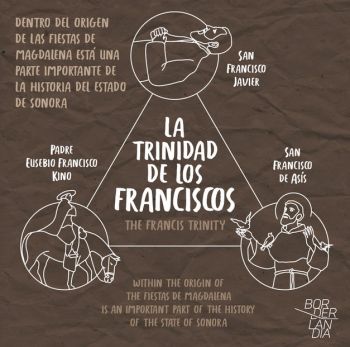
Three Franciscos of The Magdalena Pilgrimage - Xavier, Assisi and Kino
Borderlandia Infographic - Alex La Pierre
Alex La Pierre
The San Francisco Xavier Pilgrimage to Magdalena de Kino
“San Francisco es un santo muy milagroso, pero a la vez es un santo muy cobrador, y lo que debes, pagas." ("Saint Francis is a very miraculous saint, but at the same time he is a saint who exacts his price, and what you owe, you pay.") — James S. Griffith
It is said to be a tradition dating back at least 300 years when no border wall or political division existed bisecting the Arizona-Sonora borderlands region. Every year thousands of people representing different cultures walk on pilgrimage to the northern Sonoran community of Magdalena de Kino, Mexico, approximately 60 miles south of the US-Mexico boundary. The pilgrimage terminus of Magdalena is where pilgrims annually arrive on foot or on horseback to visit the popular borderlands saint of San Francisco Xavier in the days and weeks leading up to the traditional feast day of October 4. Typically, after visiting the reclining statue of the saint, the pilgrims also frequently take advantage of being on the plaza in the Sonoran community to peer down into the neighboring crypt of a Jesuit pathfinder named Father Eusebio Francisco Kino. This action of also visiting with Kino is very appropriate given the missionary’s role as the seventeenth-century harbinger of the cult of San Francisco Xavier into the Arizona-Sonora borderlands, an area known in Spanish colonial records as the Pimeria Alta.
This document presents an exploration of this binational cultural phenomenon by first providing brief biographies of Father Kino and patron San Francisco Xavier, followed by a background behind the tradition of the pilgrimage of San Francisco Xavier to Magdalena, Sonora, and finally examining the cultural stakeholders of the tradition and reasons for partaking.
To understand the origins of this tradition, an awareness of an early important Arizona- Sonora borderlands personality and patron saint is key. Eusebio Kino was born in 1645 in the alpine Trent region of Italy but at the time of birth his surname was Chini (the last name was later Hispanicized to Kino) and this birthplace was then part of the Austro-Hungarian Empire. Eusebio Kino took the middle name of Francisco as a young man in recognition of Saint Francis Xavier whose intervention he accredited to healing himself during an extreme illness along with the promise of following in his footsteps to become a missionary.
Kino likely looked up to Saint Francis Xavier, one of the founding members of the Jesuit order in the 16th century as the ultimate incarnation of a missionary having reached India and as far away as Japan to evangelize for the Roman Catholic church and performed miracles along the way. Inspired by this example, excelling in Jesuit schools and rising in the ranks of university academia, Kino kept on his promise to become a Jesuit missionary initially desiring to proselytize in China - a goal also originally on the horizon of patron San Francisco Xavier but cut short by the saint’s death on an island just off that mainland. However, when the time arrived to be shipped out to fulfill the work of an apostle, there was only one place for the mission to China but two candidates, Kino and another Jesuit. By a stroke of fate, it was decided that Kino would be sent to Mexico instead of a missionizing post in China. Kino’s adeptness at astronomy and cartography earned the freshly arrived Jesuit a place on a Spanish colonial expansion expedition to Baja California.
Due to a lack of rain for the fruition of crops, the California mission was called off and Padre Kino was re-assigned to what was considered the ‘rim of Christendom,’ the limits of New Spain in present-day northern Sonora and southern Arizona. Kino spent 24 years founding missions in this entire region and forever changing its cultural landscape in the process.
One of the Jesuit’s greatest achievements was discovering that California was one of the longest peninsulas in the world rather than an island as was commonly depicted in maps of the era. Father Kino passed away in Magdalena in 1711 after just completing the construction of a chapel dedicated to his patron of San Francisco Xavier and came to be buried within the small church. Eusebio’s other great achievement was as the region’s first peacemaker between the indigenous and Spanish, potentially the reason that in death, the Jesuit priest came to be honored by members of the Tohono O'odham arriving to pay their respect to the black robe from as far away as San Xavier del Bac mission - a potential origin of this pilgrimage tradition.
The life Eusebio Francisco Kino led and the history he left us as a major figure in Arizona-Sonora history is the cause for inspiration by many and currently the Jesuit missionary of the Pimeria Alta is being considered for sainthood by the Vatican.
An indigenous community called Uquivaba (meaning “high cliff” or “spring”) of a tribe then known as the Pima - and now the Tohono O’odham nation existed along the banks of a life-giving river in the Sonoran Desert. This village is where Kino arrived in 1690 to found Santa Maria Magdalena de Uquivaba as a visita - essentially a sub-mission without a resident priest under the jurisdiction of a nearby mission equipped with a priest called cabecera - in this case nearby San Ignacio de Caborica. The priest stationed in San Ignacio would administer duties such as baptisms, marriages, burials, and masses on occasion at Magdalena along with the other nearby visita station of Imuris.
There is a prominent local legend relating the reason why the statue of San Francisco Xavier, the icon of the pilgrimage, is located in Magdalena rather than the statue’s intended destination of its more northerly namesake, San Xavier del Bac. It is because an incident while in transit to the northern mission curtailed San Francisco Xavier’s journey: when the men carrying the statue of the saint rested in Magdalena and upon resumption of the journey the statue could not be lifted or moved and so since then it has been considered a divine intervention for placement in its present home.
Dating to the Jesuit period in Magdalena, one can still see the cobblestone foundations in a perfect line of the chapel dedicated to San Francisco Xavier within which the black-robed pathfinder was buried when looking down into the crypt in the Kino Memorial plaza. This stone footing is perhaps an indicator of the evolution in the tradition from journeying to pay respect to the deceased Padre Kino buried within the chapel dedicated to San Francisco Xavier to honoring rather the patron saint the black robe brought to the region. Considering the patron of the chapel where Kino was laid to rest was the destination of the earliest of pilgrims to Magdalena and that Padre Kino is still not officially a saint in the Catholic tradition, this could be a logical conclusion.
Another peculiar aspect of the pilgrimage to Magdalena in honor of San Francisco Xavier is that the feast day celebrated in Magdalena (October 4) is not the Jesuit saint’s feast day (December 3) but rather of another saint named Francis - San Francisco de Assisi. This alteration of the date to celebrate the Jesuit saint on the feast day of the founder of the Franciscan order is perhaps directly due to the circumstances of the Jesuit expulsion from Spanish territories in 1768 by the Spanish Bourbon monarchy. Franciscan missionaries may have altered the date in recognition of their order’s founder, who were assigned to the Pimeria Alta to fill the void where their Jesuit predecessors left off due to their sudden expulsion.
Many of the monumental-scale missions that continue to exist today in the region are physical marks of the Franciscan's ambitious building program, influence, and presence. In this way, one can see the layers of history of the region wrapped up in the pilgrimage and fiestas in Magdalena culminating on October 4 and in homage and honor of the trinity of Francis’ - Kino, Xavier, and Assisi.
In a description published in KIVA of the Fiestas de Magdalena in 1967, University of Arizona anthropologist James Griffith organizes the groups and activities of the participant stakeholders in this annual tradition. Big Jim acknowledges three cultural groups present in Magdalena de Kino drawn by the Fiestas: Mexicans and Mexican-Americans, Tohono O’odham from the U.S., and Yaqui and Mayos from southern Sonora. These cultural identities are further broken down by Griffith into roles at the fiestas, that of the pilgrim, the merchant, and the entertainer. Based on the Arizona folklorists' observations, the conclusion he draws on the festival’s 20th-century evolution is that the religious role of the pilgrim and the commercial role of the merchant is frequently merging with the modernization of northern Mexico. However, it appears that the commercial interests are for many indigenous pilgrims frequently practical and secondary to help finance the costs associated with the primary: making the pilgrimage. The Yaqui from southern Sonoran towns like Potam tend to fulfill the role of entertainers - musicians and dancers of traditional Yaqui dances such as the deer dance and pascolas. Neighbors of the Yaquis, the Mayos also perform their cultural dances with music including the harp in and around the plaza of Magdalena.
When asking these varying stakeholders their motivation behind walking the distance to Magdalena, pilgrims will most frequently cite a personal manda. The manda is a promise you make to San Francisco Xavier to come on foot or even on horseback to show your sacrifice for a petition the pilgrim makes to the Saint to intercede on behalf of their request. In return for the sacrifice, the pilgrim-aspirant hopes to benefit from the miraculous spiritual power attributed to San Francisco Xavier in the fulfillment of a particular prayer request.
The current reality that the San Francisco Xavier pilgrimage now spans the breadth of two countries highlights not only a pilgrimage that crosses borders literally but also a crossing of boundaries figuratively. It requires one to pause and reflect beyond modern political institutions like the border with its myriad of agencies and accompanying red tape to think of a time in the origins of this tradition when this all did not exist. Perhaps even more importantly, participation or merely observation in this pilgrimage is a cause for recognition in the unison of common humanity in the struggle for life beyond nationalities given the tradition’s diverse participation. As such, it can serve as a healing example from the region’s history of goodwill beyond cultural borders in aspiration of one day shedding the present era’s militarized environment rooted in the fear of the other, essentially as a counternarrative.
The pilgrimage to Magdalena can also be considered a ritual emulation of the past, rooted in religious belief but also key to the modern identity and traditions of present-day Sonorans and Arizonans of diverse cultural backgrounds. Tellingly, a statue of Eusebio Francisco Kino, one of two statues from the state of Arizona, stands in the National Hall of Statuary in the Capitol building of Washington D.C. in acknowledgment of the Jesuit’s place etched into the history of our nation. With this central position in the national psyche, there may be hope for wider reflection on the example Kino and patron San Francisco Xavier led of crossing borders to peacefully and spiritually interact with different cultures, now manifested by this pilgrimage to Magdalena, and as a legacy for guiding future international relations in the borderlands.
Editor Note: Alex La Pierre is an noted "cronista" - a recognized community expert on the culture and history of Arizona and Mexico. As of 2024, Alex has twice walked the Magdalena Pilgrimage from Nogales, Sonora. For almost a decade Alex has given internationally acclaimed tours of Arizona and Mexico through his company Borderlandia including guiding several tours a year tof Magdalena de Kino that leave from Nogales, Arizona. To read Alex's original article of the Magdalena Pilgrimage with great pictures and videos, click
https://www.borderlandia.org/magazine18/pilgrimage-magdalena
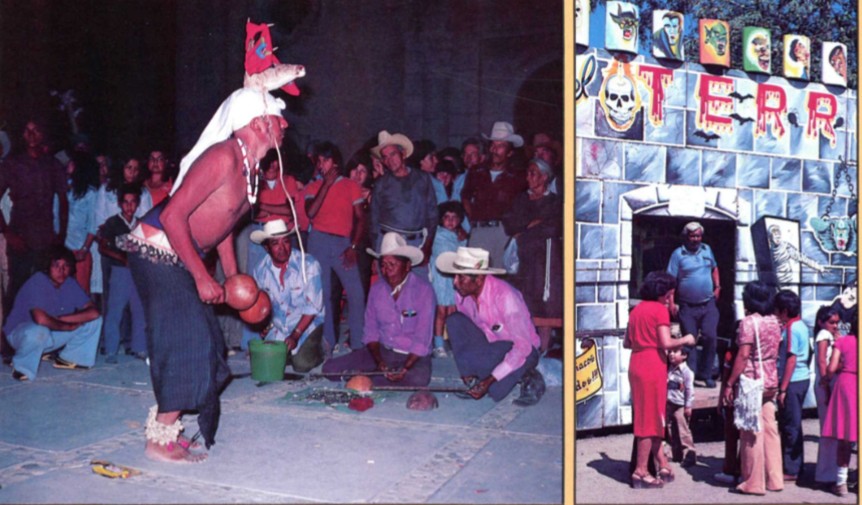
Pilgrim Yaqui Deer Dancer and Festival Entertainment at the Castillo del Terror
Pilgrimage to Magdalena
The Feast of San Francisco Reflects the Past and Present in Sonora
Bernard L. Fontana
When the hot sun of sultry September has dried the fields of Sonora in northern Mexico, when cornstalks turn the color of fodder and pumpkins and squashes lie ripe amid withered vines, then pilgrims wend their way to the small town of Magdalena de Kino to pay homage to the sainted Francisco Xavier. To be on the road to Magdalena in early October is to take part in the richest kind of living history, to participate in the weaving together of past, present, and future. Like religious pilgrims of old, these travelers leave their homes by the thousands to join with friend and stranger in a journey representing piety, hope, adventure, adoration, and personal gain. Just as Chaucer's motley group in medieval England sought out Canterbury Cathedral to worship at the tomb of Saint Thomas a Becket, so do these twentieth-century pilgrims repair to Magdalena's mission church "There to the holy sainted martyr kneeling / That in their sickness sent them help and healing.''
The focus of attention in Magdalena is a gessoed wooden statue of Saint Francis of Xavier, or San Francisco Xavier. Why San Francisco Xavier became important in northern Sonora is clear. Xavier was the patron saint of Father Eusebio Francisco Kino, the pioneer Jesuit missionary to the region. Father Kino crossed the invisible rim of Christendom in 1687, stepping beyond the northwestern perimeter of New Spain to establish more than two dozen missions and mission visiting-stations among the Pima and Papago Indians. In 1711 Kino died in Magdalena where he had come to dedicate anew chapel in honor of San Francisco Xavier. Kino was buried in that chapel, on the gospel side of the altar, and there his skeletal remains were uncovered by archaeologists in 1966.
Father Kino's patron saint was born in Navarra in 1506. As a Jesuit missionary Xavier went to Asia, where he became the renowned "Apostle to the Indies." He died December 3,1552, on a desolate island just off the Chinese coast, about a hundred miles southwest of Hong Kong. His body was placed in a coffin, packed in lime, and ultimately shipped to Portuguese Goa in India. Removed from the lime, the body remained incorrupt, a miracle that played a role in Xavier’s canonization in 1622. The most frequent depiction of the saint, either in paintings or statuary, shows him reclining on his back in a symbolic model of the actual corpse. It is such a reclining statue, lodged in a chapel in Magdalena's mission church, that draws thousands of pilgrims each year.
Although the origin of a devotion in northern Sonora focused on San Francisco Xavier is not a mystery, what remains unknown is when the change was made in the month and day of the celebration in his honor. After the Jesuits were expelled from New Spain by an edict of the Spanish King in 1767, they were replaced in their northern Sonora mission stations by Franciscans. Just as San Francisco Xavier was a great Jesuit saint, another Francis, the gentle saint of Assisi, was the founder of the Order of Friars Minor, the Franciscans. Thus the natives of Sonora were introduced to two saints Francis, one whose feast day was December 3 (Xavier) and one whose feast day was October 4 (Assisi). Although records on the subject are scant, it appears that certainly as late as 1813 the San Francisco fiesta was customarily celebrated in early December. By 1828, however, the occasion seems to have shifted from December 3 to October 4. The Franciscans had won the battle if not the war.
The result is a modern feast in honor of San Francisco Xavier celebrated on the feast day of Saint Francis of Assisi, the focus of which is a statue of San Xavier. To complete the fusion, or confusion, the replicas of the reclining Xavier that are sold in religious shops in Magdalena are garbed in the brown habit adopted by Franciscans in the last quarter of the nineteenth century—a Jesuit saint in brown Franciscan clothing! It is an ecumenical phenomenon within the ranks of the Roman Catholic Church.
While the matter of Xavier versus Assisi may be of interest to historians and of concern to liturgists, it appears to be of no importance to Magdalena pilgrims. San Francisco is San Francisco, and his blessings of good health and welfare are bestowed upon the faithful who make their way to his wooden and plaster representation. All previously existing mission churches in Magdalena were supplanted by one built between 1830 and 1832 by Father Jose Maria Perez Llera, among the last of the Franciscans to serve in Magdalena before its church was turned over to secular clergy by the middle of the century. |41|
This is the church which exists today in remodeled form. It was in use when John Russell Bartlett visited Magdalena in October of 1851. Bartlett was then United States Commissioner on the United States and Mexico Boundary Commission charged with laying out the line between the two countries as provided by the Treaty of Guadalupe Hidalgo, 1848. His account of the feast of San Francisco, written more than a hundred years ago, still serves to describe the event as it occurs in modern times:
[Begin quotation] “Although San Franciscos are as common in Mexico as Washingtons, Jeffersons, and Franklins are with us, and churches dedicated to that saint are to be found allover the country; yet this of La Magdalena is the most celebrated and potent of all, inasmuch as it contains a celebrated figure of San Francisco The original [church], with the exception of the tower, is in ruins; but a new one has been erected within a few years, which is quite an imposing edifice, with two fine towers and a large dome, beneath which the Saint reposes. For several days previous to the 4th of October, which is the Saint's day, preparations for its celebration begin; so that the devotions and offerings, with their accompanying festivities, are in full blast a day or two in advance. La Magdalena and the Church of San Francisco are the Mecca of devout Mexican Catholics. From the borders of Sinaloa on the south to the furthest outpost near the Gila, and from the Gulf of California to the Sierra Madre, they flock in by thousands, to offer their devotions at this shrine.”
“It is not unusual for very great sinners to bring their burden of guilt a distance of four or five hundred miles; a journey in this country of greater difficulty, and requiring more time, than one from New Orleans to Quebec. The poorer classes often come a hundred miles on foot, begging by the way. The more penitent, like the idolaters before the temple of Juggernaut, or the devout Mohammedan at the shrine of his prophet, prostrate themselves, and, with their hands crossed on their breasts, advance on their knees a hundred feet or more to the church. Both men and women are thus seen toiling over the dusty street and brick pavement of the church to the presence of the Saint, who is laid out beneath the dome and in front of the altar. When the votaries reach the bier, they cross themselves, and with outstretched arms repeat their prayers. They then rise to their feet and, drawing nearer, present their offerings.”
“The body of San Francisco, or rather its image, lies upon a platform or bier clothed in rich vestments, and covered with a piece of satin damask of the most gorgeous colors. The head, hands, and feet are alone exposed. These are made of wood, colored to represent flesh The offerings consist of money and candles; and as wax is quite expensive here, the poorer class present candles of tallow. There was a continual jingling of money; in fact, so constant was the dropping of silver dollars into the receptacle placed for them, that no other sound was heard To the question of what became of all this money, I received the usual reply of ‘Quien sabe?’”
“In the evening we walked about the town, and among the booths, which were arranged on every side of the plaza, and along the principal streets. Cakes of various kinds, tortillas, fruits, and aguardiente, were the staple articles; but while there were booths entirely appropriated to the sale of this intoxicating liquor, I do not remember to have seen a single drunken man. In the midst of these booths was a large in closure, covered with boughs of trees, beneath which some hundreds were assembled, and engaged in dancing. An enormous bass drum, which was heard above all other sounds, a couple of violins, and a clarinet ground out waltzes and polkas, while the beaux were swinging round the señoritas in a manner that would astonish our dancing |42| community.... But gambling, after all, seemed to predominate. Whole ranges of booths were devoted to this exciting amusement; and crowds of every age, sex, and class were assembled about them. Some of the tables were attended by women, selected, not on account of their personal beauty, but for their expertness in shuffling the cards.”
“ La Magdalena is the best built town we had yet seen; the houses are chiefly of adobe, though some are of brick, and nearly all are stuccoed and white-washed . . . . The permanent population does not exceed fifteen hundred souls, which number, during the days of the festival of San Francisco, is swelled to ten or twelve thousand.” [End quotation]
In late September of 1877 a Tucson newspaper noted: "The stampede for Magdalena, Mexico, from Tucson, during the past few days to be in attendance at the feast . . . is simply immense. The wagons loaded with men, women and children, number into the hundreds. If the Mexican people turn out in the same proportion in other towns, poor Magdalena will have to shut down her flood gates or enlarge her borders. Monte, Faro, Roulette, and other distinguished individuals are also Magdalena ward.”
The conflict between church and state which raged throughout Mexico between 1926 and 1934 reached a crisis in northern Sonora in September, 1934, when Governor Rodolfo Elías Calles and other state officials presided over a public burning of the statue of San Francisco Xavier. As a signal to the world of their intention of bringing the San Francisco cult in Magdalena to an end, they burned the sacred image in the ovens of the Cerveceria tie Sonora, or Sonora Brewery. But cults and pilgrimages die hard. A new reclining statue replaced the old one, and a grand Sonoran tradition survives.
The thousands of modern pilgrims who make their way to Magdalena are a cosmopolitan lot. Most are Mexican from varying walks of life, but many are Indian, with Papagos, Yaquis, and Mayos leading the way. There are always a few turistas, including some from north of the border, and there are the inevitable anthropology students. The latter groups are lost in the crowd. Most pilgrimages are penitential in character, and most pilgrims are inspired to make their long journeys out of a sense of guilt, anxiety, or stress in the hope that their undertaking—a form of personal sacrifice—will relieve the symptoms of these maladies. There is always hope of a miraculous cure. Miracles have happened in the past at pilgrimage sites such as Magdalena and are expected to happen in the future. It is the unseen presence of San Francisco, mediated through the reclining statue, that strengthens faith and ensures salvation.
Pilgrims may also be moved by sentiments of thanksgiving or petition. Many arrive in Magdalena seeking help; others make the trip because they had promised to do so should earlier petitions be granted. One of the better known Sonoran stories tells of a wealthy businessman who lived in Cananea, some forty-seven miles from Magdalena via a mountainous highway. This man had borrowed beyond his ability to pay; so, he promised San Francisco that should the debt be settled he would travel to the Magdalena shrine on his knees. After his creditors were paid off, the shrewd suppliant made the promised pilgrimage on his knees, comfortably settled on a mattress in the back of a pickup truck.
A French observer who saw the Magdalena fiesta in the mid-nineteenth century said of those who attended, "Piety was the pretext, but pleasure was the goal." One might have the same impression today. Beer and hard liquor are consumed in prodigious quantities. Bowlegged Sonoran cowboys dance their solo jigs in El Oasis bar to the accompaniment of polkas and schottisches played by three-piece bands, Sonoran style. Traveling salesmen hawk their wares of blankets, balloons, pots, pans, and glazed ceramics. Others peddle healing herbs and dried animals, particularly invertebrate sea creatures, as remedies. Photographers with Polaroids sell instant pictures. Fortune tellers wander the streets while small crowds cluster around shell-game artists, losing their pesos and dollars as the operator palms the (Continued on page 60) |45|
(Continued from page 45) pea. There are Ferris wheels and merry-go-rounds and sideshow freaks and spook houses. There are dart boards and lottery games and shooting galleries, as well as booths where Mexican foods of every description are sold.
In spite of appearances, however, it is more than penitence, the need to petition, or the longing for mere entertainment that brings the multitudes from afar by foot, train, car, bus, and truck. It is hope—hope that a visit to San Francisco will bring good health and healing through the saint’s miraculous powers. Pilgrims can even borrow some of this power by holding personal religious images—holy pictures or other statues—against the reclining figure of the saint. These are taken home and placed in household shrines or village chapels, reminders of the journey to Magdalena, reinforcements of belief.
The modern pilgrimage to Magdalena continues to combine virtually all of the features of an eleventh-century pilgrimage to some European shrine. There are piety and pleasure, priest and panderer, hope and hostility, miracle and malediction. The Magdalena story is exciting proof that human events, which are the river of history, flow in an infinite stream. Habits of mankind are not easily broken.
Bibliographic Note: By far the most detailed study of the Magdalena pilgrimage and fiesta is in “The Religious Festival." an unpublished Ph.D. dissertation by Henry F. Dobyns (Cornell University, 1960). Perhaps somewhat more accessible is a series of five articles in "The Fiesta of St. Francis Xavier. Magdalena, Sonora, Mexico," published in a special issue of The Kiva, the quarterly journal of the Arizona Archaeological and Historical Society, in 1950 (Volume 16. numbers 1 and 2). A useful book about the history and modern function of Christian pilgrimages is Victor W. Turner and Edith Turner, Image unit Pilgrimage in Christian Culture (1978) |60|
Bernard L. Fontana
Pilgrimage to Magdalena
The Feast of San Francisco Reflects the Past and Present in Sonora
American West 18 (Sept/Oct 1981): 40-45, 60
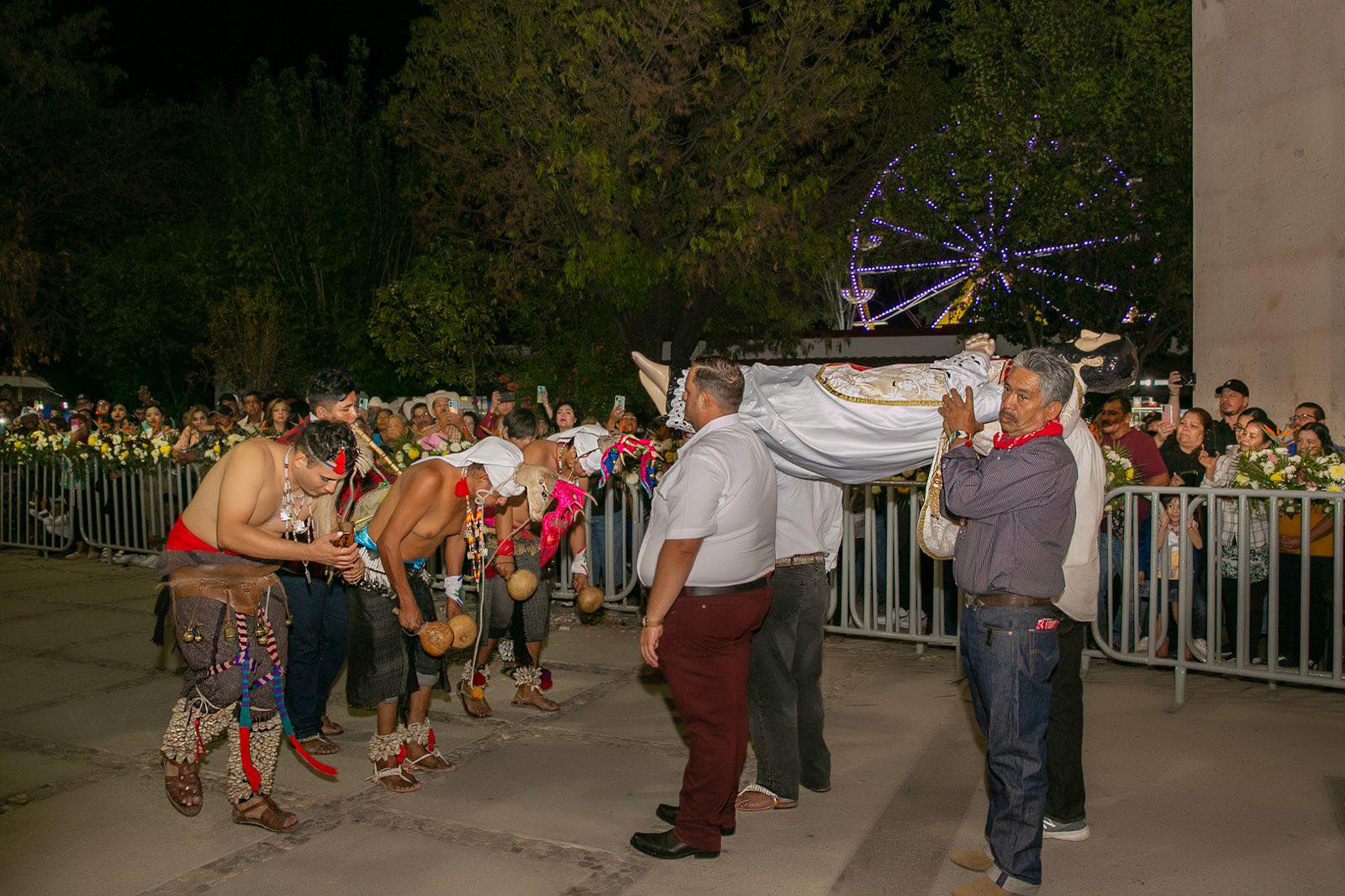
Yaqui Yoeme Deer Dancers Paying Homage to San Francisco Outside His Chapel
Emigdelia Pino Soto
Three Centuries of Faith and Resistance in Magdalena de Kino:
The Day They Tried To Stop The Celebrations With Three Thousand Soldiers.
Google English Translation - Original Article in Spanish Below
Today marks three hundred and fourteen years since the celebratins in honor of San Francisco Xavier began in Magdalena de Kino, Sonora. Since the Jesuit missionary Eusebio Francisco Kino died on March 15, 1711, indigenous groups began to visit his grave and the chapel of San Francisco Javier, that Father Kino dedicated on the day of his death.
During these three centuries many events have arisen around the date of the great celebration, facts that have not stopped pilgrims from paying their mandas [promises] and venerating the saint.
The Crisis of 1939 and The Yaqui Resistance.
After the expulsion of priests from the state of Sonora, on September 29, 1939, three thousand federal soldiers were sent to Magdalena by an order issued by the Governor Rodolfo Elias Calles, to close the church of Santa Maria Magdalena. All of the church’s statues, images and sacred vessels were moved to another location.
This had its repercussions among the Yaquis [Yoeme] Indians, who, as the celebration of San Francisco approached, threatened to launch a revolution in the State of Sonora. The ultimatum was clear: if by the next day they [the Sonoran government] did not return the statue of saint [Xavier] to its altar, they would rise in arms. In the face of such a threat, Governor Elias Calles sent a contingent of three thousand federal soldiers to Magdalena to reinforce the garrison of one hundred soldiers who were already in the town.
Desecration and The Celebration Without the Statue.
All this tension was due to the expulsion of all Catholic priests in the state for opposing the education program imposed on schools. A mob of politicians, "encauzadores de nuevas doctrinas", broke into the church under the protection of the police commander, Dávalos, with some deputies who came from Hermosillo. The invasion of the church was to seize the statue of San Francisco and take it as a prisoner to later be burned in a ritual at the Sonora Brewery. According to the newspapers of the time, there was only one hand left, which was used as a paper towel holdler in an office of a municipal official.
In the face of this situation, indigenous groups like Yaquis [Yoeme] and Tohono O’odham were heading towards the town and, setting up camps outside Magdalena. Federal troops stood in front of the old church and others on the roofs of public buildings to keep the warriors at bay.
Despite the ultimatum issued by the Yaquis to the authorities, the indigenous groups held their celebration in fully, with prayers and dances, as the sale of liquor was suspended as a precautionary measure.
The Mystery of the Statue and Its Return.
While some say that the statue was burned at the Sonora Brewery with the other religious objects of the Magdalena mission church, others claim that it was bought and was in the safe of the municipal president of the town.
The holidays were held without the statue of the saint present. A year later, they delivered a statue that a former official had buried in his home and that, months later, had though of collecting money [to view the statue]. When the authorities discovered this fact, at the order of the governor, the statue was returned to its sacred space.
Emigdelia Pino Soto
Magdalena de Kino Honorary Cronista
Mi Magdalena de Kino Sonora
Facebook Post
October 2, 2025
https://www.facebook.com/permalink.php?story_fbid=pfbid0Syyc7S9D3q3d4APFSkqHacXm7dJqBDCaT6QfHjqheX9Ph91mtiV2kqkD47SCk4Zjl&id=100083589181755
Editor Note: My apologies to the author for my translation based on the Google Translator.
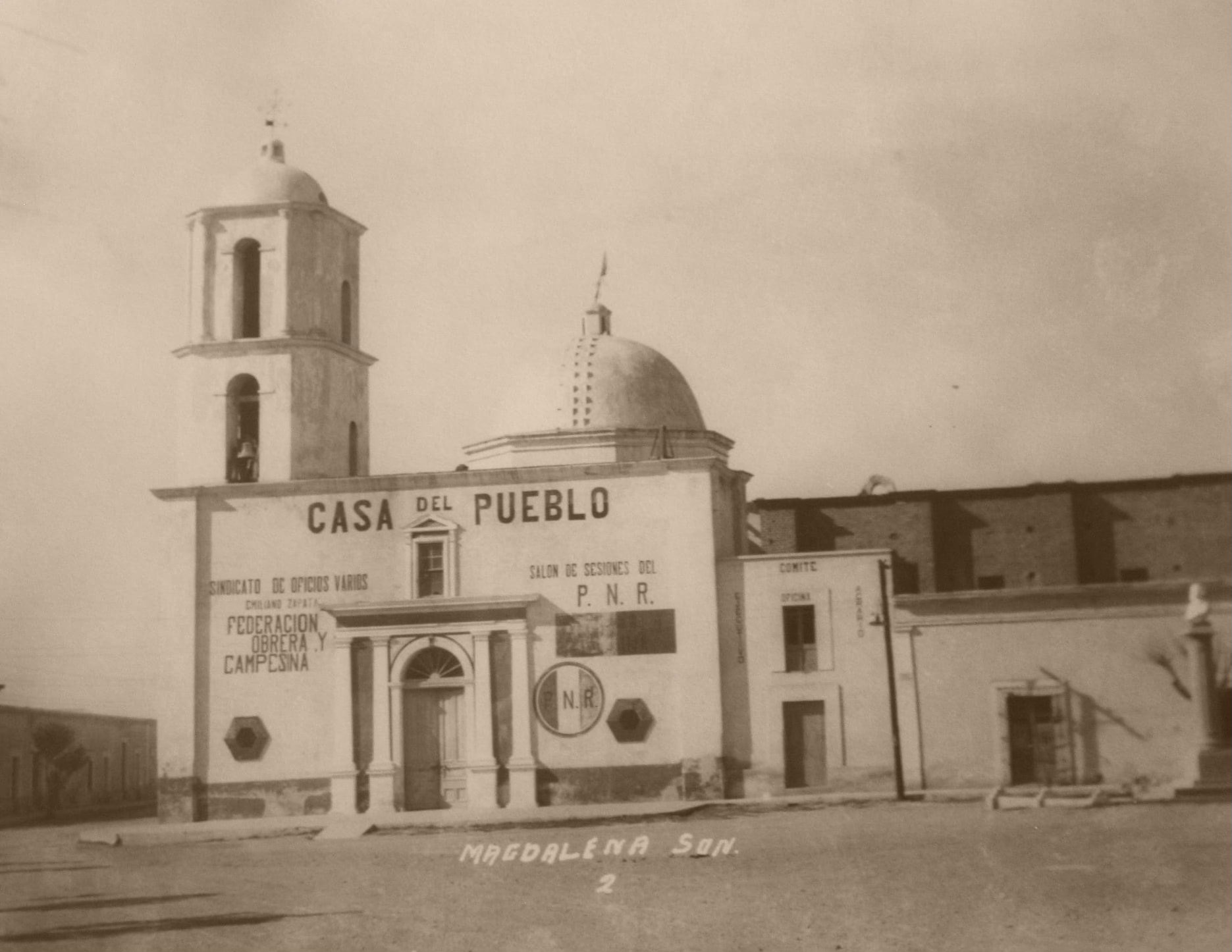
Church of Santa Maria Magdalena Converted Into Meeting Hall By Governor Calles
Emigdelia Pino Soto
El día en que intentaron suspender las fiestas con tres mil soldados.
Tres Siglos de Fe y Resistencia en Magdalena de Kino
El día en que intentaron suspender las fiestas con tres mil soldados.
Tres Siglos de Fe y Resistencia en Magdalena de Kino
Hoy se cumplen trescientos catorce años de que se iniciaron las festividades en honor a San Francisco Javier en Magdalena de Kino, Sonora. A partir de que el misionero jesuita Eusebio Francisco Kino falleciera el 15 de marzo de 1711, los grupos originarios comenzaron a visitar su tumba y la capilla de San Francisco Javier, misma que el padre Kino bendijo el día de su muerte.
Durante estos tres siglos se han suscitado muchos acontecimientos en torno a la fecha de la gran festividad, hechos que no han frenado a los peregrinos para pagar mandas y venerar al santo.
La Crisis de 1939 y la Resistencia Yaqui
Luego de la expulsión de los sacerdotes del estado de Sonora, el 29 de septiembre de 1939, se enviaron a Magdalena tres mil soldados federales por una orden expedida por el gobernador Rodolfo Elías Calles, para que el templo de Santa María Magdalena fuera cerrado y todas las imágenes sagradas fueran trasladadas a otro lugar.
Esto tuvo su repercusión entre los indios Yaquis, quienes, al aproximarse la celebración de San Francisco, amenazaron con lanzarse a una revolución en el estado de Sonora. El ultimátum era claro: si para el día siguiente no regresaban la imagen del santo a su altar, se levantarían en armas. Ante tal amenaza, el gobernador Elías Calles envió un contingente de tres mil soldados federales hacia Magdalena para reforzar la guarnición de cien soldados que ya estaban en la población.
La Profanación y las Fiestas sin Imagen
Toda esta tensión se debió a la expulsión de todos los sacerdotes católicos en el estado por oponerse al programa de educación impuesto en las escuelas. Una turba de políticos, "encauzadores de nuevas doctrinas", irrumpieron en el templo bajo la protección del comandante de policía, Dávalos, y de algunos diputados que vinieron de Hermosillo. La invasión del recinto fue para apoderarse de la imagen de San Francisco y llevárselo como reo para después ser quemado en un ritual en la Cervecería Sonora. Según los periódicos de la época, solo quedó una mano, la cual usaban de pisapapeles en una oficina de un funcionario municipal.
Ante esta situación, los grupos indígenas como Yaquis y Tohono O’dham fueron arribando a la población, estableciendo campamentos a las afueras de Magdalena. Las tropas federales se mantuvieron frente a la antigua capilla y otras sobre las azoteas de los edificios públicos para mantener a raya a los guerreros.
A pesar del ultimátum lanzado por los Yaquis a las autoridades, los grupos realizaron su celebración en completo orden, con sus rezos y danzas, ya que la venta de licor se suspendió como medida precautoria.
El Misterio de la Imagen y su Regreso
Mientras que unos dicen que la imagen fue quemada en la Cervecería Sonora con los demás objetos religiosos de la misión de Magdalena, otros aseguran que fue comprada y se hallaba en la caja de seguridad del presidente municipal de la población.
Las fiestas se realizaron sin tener al santo presente. Un año más tarde, entregaron una imagen que un exfuncionario había enterrado en su casa y que, meses después, tenía expuesta con la idea de captar limosnas. Al percatarse las autoridades de este hecho, por disposición del gobernador, la imagen fue regresada al sagrado recinto.
Por: Emigdelia Pino Soto
Cronista Honorario de Magdalena de Kino.
Mi Magdalena de Kino Sonora
Original Facebook Post
October 2, 2025
https://www.facebook.com/permalink.php?story_fbid=pfbid0Syyc7S9D3q3d4APFSkqHacXm7dJqBDCaT6QfHjqheX9Ph91mtiV2kqkD47SCk4Zjl&id=100083589181755
Camino de Kino
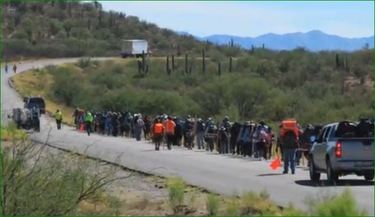
Pilgrims Walking on Highway 15
From Nogales to Magdalena de Kino
Prayerful Pilgrimage
Tim Steller
The long journey starts with a small gesture. Thirty-seven people alight from seven vehicles in Nogales, Sonora, and cut across the highway to a tiny white chapel nearly swallowed by the surrounding factories.
Inside, they kneel to pray. Then 24 of them rise, cross themselves and start walking south.
They will walk for 36 hours across 55 miles of pavement, gravel and sand. The other 13 people, traveling in vehicles, will help them reach their destination: the mission church in Magdalena de Kino.
Arriving there, this Tucson group of family and friends will have fulfilled their - a promise to San Francisco Xavier.
Roberto Lopez made such a promise in 1978. After a newborn relative was given last rites, Lopez promised he would walk to the Magdalena mission if the baby survived. Miraculously, the baby did, and come October that year, Lopez walked.
Lopez, now 48, strode from his house near Reid Park, planning to head out to Magdalena alone. He stopped at his parents' home near Pueblo High School, where his brother-in-law John Robles decided to go with him. Walking day and night for about 120 miles, they made it.
"By the third year, more people came along with us. It kind of snowballed," Lopez says.
Year after year since then, Tucson's Lopez and Robles clans, plus friends and acquaintances, have gathered to make the pilgrimage to Magdalena. They do it not just for religious reasons, but also to renew their bonds with one another, Lopez said.
Striding down the edge of Mexico's Highway 15, they join a dispersed flow of Mexican, Mexican-American, Tohono O'odham and Yaqui pilgrims.
All are taking part in a tradition of Sonoran Desert Catholicism that dates back at least to the 1800s. They walk to the mission churches - either San Xavier del Bac south of Tucson or, more often, to Magdalena's mission - to fulfill a promise or give thanks.
Although thousands walk into Magdalena from all directions, more pilgrims these days drive.
They come for a festival that culminates on Oct. 4, the feast day of San Francisco Asís, the patron saint of the Franciscan order that founded these missions. But the walkers keep their focus on San Francisco Xavier, the patron saint of foreign missions, a statue of whom lies in Magdalena.
For the walkers, their sacrifice - pain - demonstrates their faith.
There is little pain early on in the trek: The walkers are fresh when they start from Nogales at 6 a.m. Thursday, and the weather is cool. Juan Mesquita, at 59 the oldest walker this year, is on cruise control.
Mesquita, of Phoenix, is making his first pilgrimage. When his grandson disappeared for two months this past summer, Mesquita prayed for him to come back. A week later, the boy did.
"Whether that was a coincidence, I don't know," Mesquita says. "But I said, 'I'm going to do it (the walk).' "
Mesquita doesn't agree with those who walk only if God performs miracles for them in advance.
"I'm not about to tell the Lord what to do," he says.
Rather, he and others make a manda, or promise, to walk in hopes that a prayer will later be answered. Often they ask that a sick relative be healed. The walk is a demonstration of faith, not payment for a miracle, Mesquita says.
That concept was a hard sell to Tucson walker Nicole Ayala, 18, after her first pilgrimage.
"The first year I did it for my dad's heart condition," Ayala says. "When I came back (from Magdalena), he was in the hospital.
"I was pissed off. I thought, 'Why the hell did I do this?' "
But gradually Ayala came to see things Mesquita's way. Plus, she found, the sacrifice itself can be a gift - an opportunity for reflection.
"I'm not gonna lie to you. It can be for selfish reasons," Ayala says. "If you don't see during this walk that it's the time God gave you, then you're missing out."
The 24 walkers begin taking advantage of that time south of the Mexican customs station, approximately 11 miles into the journey, as the sun sweeps toward midday. They spread out over a half-mile of the highway's edge, walking in small groups or alone.
Only the occasional crunch of grasshoppers underfoot and stench of dead animals break the conversation and meditation. A cooling wind blows.
About every three miles, the helpers park the vehicles and erect resting stations for the walkers. They set up chairs, pass out water and tend to blistering feet.
Just north of Cibuta, Frank Lopez, Roberto's brother, winces as his sister, Terri Galvez, applies the group's time-tested remedy to his tortured foot.
She soaks a needle and thread in rubbing alcohol, then lances the blister and pulls the thread partway through, so that two tails of thread emerge from the blister. She ties the tails and cuts off the excess thread.
Lopez slips on his socks and shoes, then launches down the road.
"The thread keeps the blister from closing up," Galvez says.
The aid of the 13 helpers is not simply a favor from friends, she adds. They are fulfilling their own manda.
"To me, it's equally as important as walking," Galvez says.
Others who cannot make the pilgrimage park alongside the highway and hand out food and water to walkers they do not know.
After 28 miles of walking Thursday, Ronnie Molera is the last one to arrive at Rancho Aguascalientes, the Tucson group's overnight resting place. Roberto Lopez accompanies the last arrival, as he always does.
Blood blisters cover the 23-year-old Molera's feet, which he soaks in a tub of water mixed with a disinfectant. Then he crashes in a sleeping bag while the others eat spaghetti and drink beer. The next morning he wants to walk.
"They're telling me not to do it," Molera says. "But that gives me more motivation."
Without a signal, the walkers trail out of camp at around 5 a.m. For the first hour, they walk in darkness, carrying flashlights to alert drivers. The world is silent except for a cold wind that later bears dawn.
For Ernie Sanchez, this is the start of a sacred time.
"The first day (of walking), I prepare for the second. The second day, I pray - all day," Sanchez said.
The walkers descend gradually to Imuris, a crossroads town where they leave the highway. The midday sun bakes the town and reflects off its whitewashed façades.
At lunch there, Aaron Valencia, the victim of a chronically injured knee, leaves the walkers and joins the helpers.
He has been wearing a hat covered in pinned-on trinkets, known as or miracles. A baby's booty represents hopes for the baby his girlfriend is expecting in April.
He had planned to walk to the church and pin the trinkets on the saint's robe. But his injury does not mean his prayers are powerless.
Another walker, Juan Robles, puts on Valencia's hat so the milagros can finish the pilgrimage.
After bathing in the Río Magdalena, the walkers push along a dusty road among fields of cabbage and radishes.
Ronnie Molera, leaning on a 6-foot walking stick, drops further behind. His feet have blistered over again, and the new blisters have popped. His hips ache, his thighs ache and his knees ache.
"I knew it was going to hurt, but I didn't know it was going to be like this," Molera says.
But he has a strategy for moving on, after more than 50 miles of walking.
"I visualize everybody I'm doing this for. I'm carrying them, and that's why I'm going so slow," he says.
Drivers and pedestrians on the approach encourage him, each with the same words: "Ya mero" - "almost there."
The walkers pass down Magdalena's Avenida 5 de Julio after dark, arriving in the town square amid the bewildering swirl of Friday night festivities. They exchange hugs, then they walk - avoiding cobblestones - to the little side chapel where the statue of San Francisco Xavier lies.
There, they pin milagros on the recumbent statue, caress it and kiss it.
Although he has run five marathons in his 59 years, Juan Mesquita can barely walk.
"Thank you, Lord," he says. "It's done."
Magdalena De Kino, Sonora.
Tim Steller
Arizona Daily Star
October 4, 1998, Page: 1A
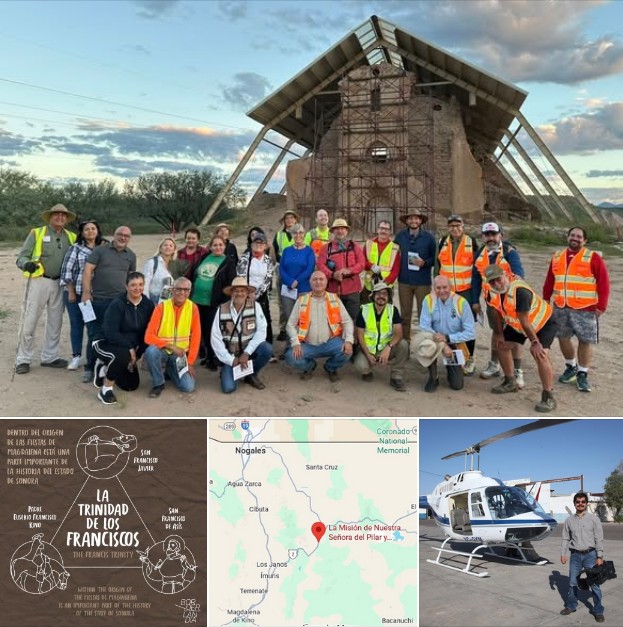
Reflexiones De La Peregrinación A Magdalena De Kino 2025
Gabriel Ruiz - Documentary Producer, Videographer and Pilgrim
Pilgrims Walk 63 Kilometers (40 miles) From
Kino’s Mission de Nuestra Señora del Pilar y Santiago de Cocóspera
Mark O'Hare - Editor
Magdalena Pilgrimage Reflections 2025
Video From Cocóspera To Magdalena de Kino
The Essence of The Worldwide Phenomenon of Pilgrimage Is Revealed In The Beautiful Video “Reflexiones De La Peregrinación A Magdalena De Kino 2025” [Reflections On the Pilgrimage To Magdalena de Kino 2025] Created By Documentary Producer, Videographer and Pilgrim Gabriel Ruiz. Gabriel and his and fellow caminantes made the Magdalena Pilgrimage by walking 63 Kilometers (40 miles) from Kino’s Mission de Nuestra Señora del Pilar y Santiago de Cocóspera through Ímuris to Magdalena de Kino. See the Pilgrimage Reflections video at https://www.youtube.com/watch?v=LvwCxky09cQ
The 6 minute Pilgrimage Reflections video is in Spanish with English subtitles and has scenes of some of Sonora’s most beautiful country along its canyons through the oak and juniper covered mountains of Highway 2 and its agricultural oasis valleys along Highway 15 to Magdalena de Kino.
What I liked most about the video is that Gabriel Ruiz recognizes the many people who travel great distances from their homes to support the pilgrims along the pilgrimage routes with food and water, medical care and encouragement. Thank you Gabriel for honoring these people who also are making their pilgrimage. In the top photograph of the mission at Cocóspera, Gabriel is in the center of the front row wearing the apple green colored relective safety vest.
Sister Eileen McKenzie of the Kino Border Initiative/Iniciativa Kino para la Frontera sums up the essence of pilgrimage and the human need for pilgrimage in Spanish (4.30 minute mark). The English translation in subtitles of Sr. Eileen’s thoughts are:
“I was afraid because I did not train, I did not prepare. I just said, it’s time to walk. I am leaving. And I believe that this is the path of life, right? Because even though we prepare, we have some struggles, it’s not that easy. But we are still called, even though we don’t feel we are prepared. We have to walk in life. And God finds us that path.”
Sister Eileen is in the center of the second row in blue in the top photograph before starting her pilgrmage from the Kino mission at Cocóspera.
The Pilgrimage Reflections video also features interviews on the human need for pilgrimage with the new Bishop of Nogales, Bishop José Luis Cerra Luna, and the vice postulator for the Kino sainthood cause, Father Claudio Murietta. In the top photograph of the mission at Cocóspera, Father Claudio is in the center of the front row wearing the orange reflective safety vest.
When Padre Kino named the mission at Cocóspera, Nuestra Señora del Pilar y Santiago (Our Lady of the Pilar and of St. James) he was thinking of the world's most famous European pilgrimage routes - the Camino de Santiago to Compostela, Spain. Before starting his missionary work in the New World, Kino ministered to pilgrims in the important city of Altötting (Altoetting). Altötting is a pilgrimage site for central Europe and is called the "Loreto of Bavaria." Altötting is east of Munich near today's German-Austrian border.
The O'odham people began the Magdalena Pilgrimage over 300 years ago to honor Padre Kino at his grave site in Magdalena. Kino died in Magdalena in 1711 hours after dedicating a chapel to his patron saint - the great Jesuit missionary Francis Xavier.
Last year 2024 Gabriel Ruiz walked the 100 kilometer (60) mile pilgrimage route from Ambos Nogales To Magdalena. Before the Covid Pandemic, Gabriel produced and directed The Kino documentary "Padre Sin Fronteras.” The 20 episode Kino documentary with each episode of 30 minutes is complete and funding is being sought for its public release. The 4 minute trailer of "Padre Sin Fronteras" can be viewed at https://vimeo.com/showcase/5968703 We are looking forward to the documentary’s release.
#padrekino #venerablekino #FiestasDeOctubre2025
Mark O'Hare - Editor
Magdalena Pilgrimage Reflections 2025
Video From Cocóspera to Magdalena de Kino
Eusebio Francisco Kino Facebook Post
October 14, 2025
https://www.facebook.com/eusebio.kino.56/posts/pfbid0goNgVNVk8UyCXFvmh1E19Q3j2U5aZZiBcRXEnono6PGJLZWDXoGWagV6XSVxvdhjl
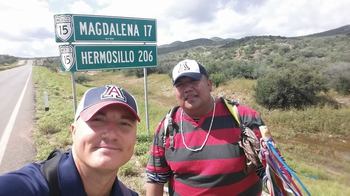
Television Journalist Paul Cicala and Bronson Smith on the Camino de Kino
The Pilgrimage in Film
Reflexiones De La Peregrinación A Magdalena De Kino 2025
[Reflections On the Pilgrimage To Magdalena de Kino 2025]
Gabriel Ruiz
Pilgrim, Producer and Videographer
In Spanish with English Subtitles (6 minutes)
Pilgrimage from Kino’s Mission de Nuestra Señora del Pilar y Santiago de Cocóspera
Click
https://www.youtube.com/watch?v=LvwCxky09cQ
La Fiesta de San Francisco Javier - Magdalena de Kino
The Magdalena Pilgrimage and Fiesta
Sergio Raczko
Documentary
In Spanish
Click
https://www.youtube.com/watch?v=jWtt0Gvek1Y
Pilgrimage to Magdalena 2014
Paul Cicala
TV News Report
The News Program runs for first 4 minutes
Extended Film Footage for next 6 minutes
KVOA TV - Tucson
In English
Click
https://www.youtube.com/watch?v=aVgM6mf5xds
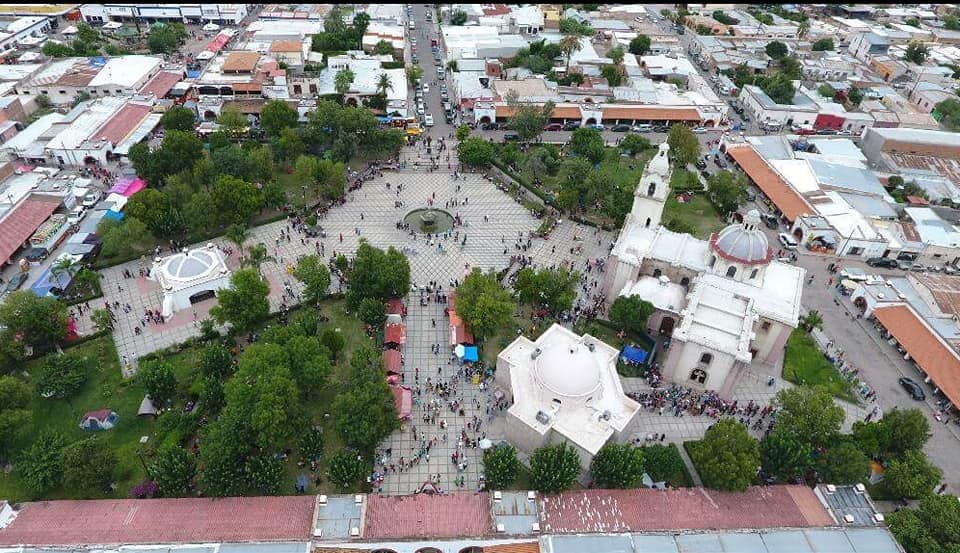
Pilgrims Line Up To Visit The Capilla de San Francisco (lower right)
Pilgrims Also Visiting Kino Mausoleum (lower left)
In The Plaza Monumental Padre Eusebio Francisco Kino
National Monument of Mexico
The Pilgrimage in Contemporary Song
"Magdalena"
Brandon Flowers
Singer / Songwriter
Heartland / alternative rock star Brandon Flowers wrote the song "Magdalena." He sings "Magdalena" on his hit 2010 solo album "Flamingo." Flowers told Rolling Stone magazine that "Magdalena" was inspired by a documentary about the Magdalena pilgrimage.
Flowers' song is about the last 60 miles of the pilgrimage route in Mexico from Nogales, Sonora to Magdalena de Kino. Many pilgrims begin their journey at Mission San Xavier del Bac in the United States and cross the United States - Mexico border.
"Magdalena" with acoustic guitar accompaniment
Click
https://www.youtube.com/watch?v=TA84NSp-hdU
"Magdalena" from Brandon's "Flamingo" album with scrolling lyrics
Click
https://www.youtube.com/watch?v=4vXrc4f8BZs
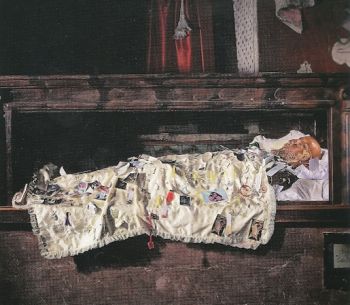
Pilgrims' Prayer Intentions Pinned To
Reclining Statue of St. Franics Xavier
Mission San Xavier del Bac, Arizona
Pilgrimage to San Xavier
Bernard L. Fontana
To become a pilgrim is to embark on an adventure, to leave the comfort and security of one's home, neighbors, and familiar surroundings as an act of faith. It can be motivated by the need to do penance. It may be Inspired by a sense of thanksgiving. It can be a sacrifice offered in petition.
A pilgrimage must, however, have a sacred place as its goal.
The tradition of pilgrimage is as old as organized religion. And the custom is alive and thriving in southern Arizona where Mission San Xavier del Bac, founded in 1700 by Jesuit missionary Eusebio Kino, has become the magnet for peregrinos, pilgrims, who walk to the mission, hundreds of them each year.
The journey has to be on foot. Driving or riding doesn't count.
The Mission San Xavier we see today was built by Franciscans between the late 1770s and 1797. It is the parish church for Papago Indians who live on the San Xavier Indian Reservation; it is one of Arizona's most popular tourist attractions; and, beginning possibly as early as the last century, it has become a center of pilgrimage for many of the region's Mexicanos or, Americans of Mexican descent who are bearers of a Christian tradition rooted in antiquity.
The mission is located about nine miles south of downtown Tucson. On any day of the week, but especially on weekends, pilgrims make their way south along Mission Road or east along San Xavier Loop Road toward the church. They walk singly, in pairs, trios, or in larger groups. Their heads are uncovered, or they wear wide-brimmed hats, baseball caps, or bandannas. A few wear the religious habit of a saint or sectarian figure. Some carry umbrellas. They may carry water bottles and be without visible logistical support. Or they may walk ahead of a car or truck that will park, then catch up again every few hundred yards. They walk unaided, although some use walking sticks, canes, even crutches.
The pilgrims are of all ages: young children who are hardly more than toddlers, boys and girls, young men, women - some with babies in arms - middle-aged, and elderly. Some stand erect; others are stop shouldered. Some walk briskly; others, idly, playing as they go and aiming rocks at rabbits or birds in the brush beside the road; still others shuffle along, painfully determined to make it all the way to their destination. There are those who laugh, smile, and talk. There are those whose countenances are grim, sad, or reflective and who say little or nothing.
They share a common goal. It is to cover the miles on foot to Mission San Xavier del Bac and, once there, to give thanks to God through one of the saints for a blessing received or to petition for a blessing desired.
For some, the walk is not enough. A few elect to give further evidence of their devotion and added meaning to their sacrifice by going the length of the nave or sometimes all the way from the gate at the atrium in front of the church - on their knees. Fewer still throw themselves flat before the high altar.
Many light votive candles in honor of a particular saint (more than three dozen are represented inside the church by images sculptured in the eighteenth century). Many more affix small metallic votive offerings (milagros), usually in the shapes of afflicted body parts, to the coverlet over the reclining statue of San Francisco lying on an altar in the west chapel.
The majority of these pilgrims are carrying out the terms of a vow (manda) made to God through the intermediary of a saint. Others make straightforward requests.
Notes left beneath burning votive candles in the mission's mortuary chapel during a typical month tell part of the story:
"As que me rínda el dinero St. Lazaro." (Make my money stretch, Saint Lazarus).
Or another in translation: Fairest sainted child Atocha [i.e., Christ who appeared as a child and aided the Christians at the time of the Moorish invasion of Atocha, Spain], we give you thanks for all the favors that we have received from you daily. Thank you, adored Child of Atocha, for having helped my little son J. ···· with his left hand and for his having come out of his two operations well and able to use his little hand Many thanks to you. Child of my heart. I promised to dress him like you and I fulfilled my promise for three months, and now I offer you his habit (a beautifully hand-sewn tunic and cape) in the name of my son J…From now on, you will be his advocate; so take of care him, protect him, and guide him on the right path now and forever. Thank you for your miracles and blessings, sainted Child of Atocha.
And in English, written on the back of a voided personal check: Dear God - I am in so much trouble with the law. Please help me be strong and give me thoughts to help me and my family and friends who are going through this. I'm begging you to please help. I don't want to go to prison. And I don't want to be scarred for life. God help me be out of this and let all this be over real soon.
With nearly equal anguish: Dear Sweet Jesus, Sacred Heart. Here I am asking you please to help me in my life, help me with my divorce. Please!
Don't let me hurt anybody! Help me make a better future for me and my kids. I promise to try very hard. Please be with me all the way. Please help my husband not to hurt so much. Help him, please.
Forgive me my sins. Have mercy on me.
Thank you for every blessing you have given us. Please be with me. Give me strength.
I love you.
And most poignant of all: St. Anthony. Please give my baby back. Please.
Pilgrimage. An act of faith, an expression of deeply held religious convictions. And famous, beautiful Mission San Xavier del Bac is the goal. It is a holy place in which to receive affirmation of one's innermost sentiments, whether of penance, thanksgiving, or petition - a place that provides beauty to the eye and sustenance for the soul.
Dr. Bernard L. Fontana
Pilgrimage to San Xavier
Arizona Highways
November 1986
To View and Download
"Pilgrimage to San Xavier"
For the article's original format, the entire Novermber 1986 issue of Arizona Highways Magazine must first be accessed on the Arizona Memory Project's page for that issue.
Click
https://azmemory.azlibrary.gov/nodes/view/37202
Then click on the pdf icon on the issue page that is to the right of the Novermber 1986 issue front page image. The front page image is on the left side on the page. The article is at the back on pages 44 - 48
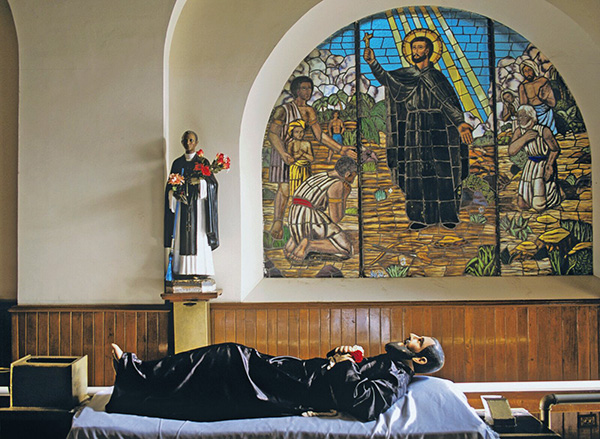
Reclining Statute of Saint Francis Xavier
Today's Chapel of St. Francis Xavier
Magdalena de Kino
Pinart Exhibits Kino Burial Record on European Tour
Robert H. Jackson
Some sacramental registers ended up in private collections after they had been purloined. One example is sacramental registers from several parish archives in northern Sonora, now in the Pinart collection of the Bancroft Library at the University of California Berkeley. Hubert H. Bancroft (1832–1918) hired Alphonse Pinart (1852–1911) in the late 1870s to collect documents from northern Mexico.
Pinart visited the parish archive of the former Jesuit mission community of Santa María Magdalena located in northern Sonora, and purloined baptismal, marriage, and burial registers. He was particularly interested in the 1711 death record of Eusebio Francisco Kino (1645–1711), who established a number of missions in northern Sonora. Pinart later exhibited the Kino death record on tour in Europe.
Robert H. Jackson
To Educate and Evangelize:
The Historiography of the Society of Jesus in Colonial Spanish America
Jesuit Historiography Online 2018
Images of the Magdalena's Remarkable Reclining Statue of Francis Xavier
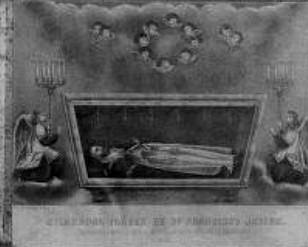
“Milgrosa Imagen De Sn. Francisco Javier.
Que Se Venera En Al Iglelsia Parroquial De La Villa De La Magdalena. Sonora”
Currier and Ives Lithograph
Currier and Ives Statue Lithograph
James S. "Big Jim" Griffith
Beliefs and Holy Places:
A Spiritual Geography of the Pimeria Alta 1992
The famous New York firm of Currier and Ives also made an image Magdalena’s San Francisco. I have not been above to discover anything about the circumstances of its production, but from internal evidence it seems to have been made between 1874 and 1890.[41] It is entitled “MILGROSA IMAGEN DE SN. FRANCISCO JAVIER. Que se venera en al Iglesia Parroquial de la villa de la Magdalena, SONORA” (Miraculous statue of St. Francis Xavier which is venerated in the parish church of the town of Magdalena, Sonora) [42]
It shows the saint reclining in an open-fronted casket that is flanked by kneeling angels bearing candelabra. The saint is bearded and his hands are folded; his feet are not crossed. he is wear a white garment covered by a rich cloak that is hung over his shoulders. Over the casket hover twelve cherub heads in a cloud. The statue certainly does not appear to be the same as that show in the old photographs or in the Posada print. These images of Magdalena’s San Francisco, like the legends recounted earlier, are evidence of the |56| regional importance of this unique composite saint. Like the legends, they tie the Arizona-Sonora borderlands to other parts of the world, while at that same time affirming the regional important of the devotion. .. |57|
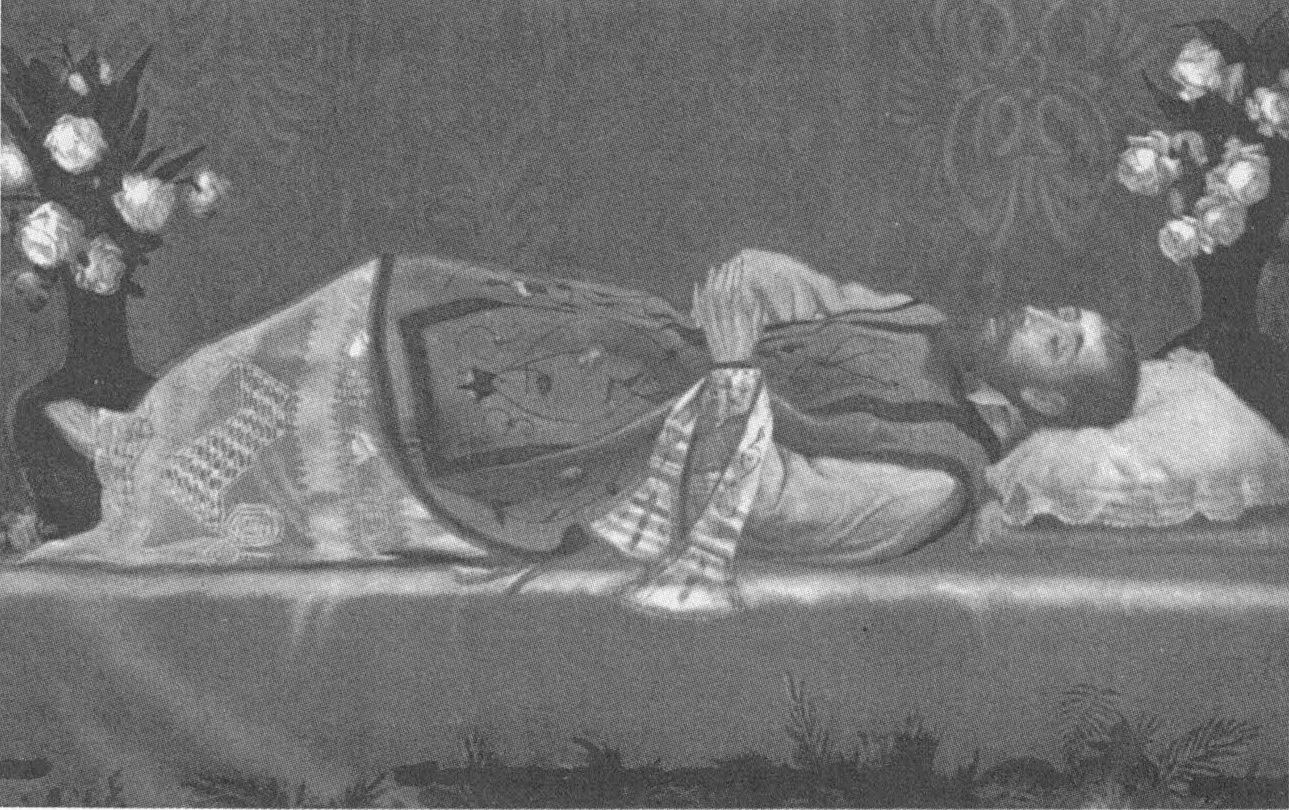
Photograph of Reclining Statute of St. Francis Xavier Before 1930
Model For José Guadalupe Posada Print
Statue Photograph Before 1930
James S. "Big Jim" Griffith
Beliefs and Holy Places:
A Spiritual Geography of the Pimeria Alta 1992
In Sonora, the leftist regime of Plutarco Elias CaIles actively discouraged and even attempted to suppress many Catholic practices.
In September of 1934, Sonoran government officials ordered that the saints' images, including that of San Francisco, be removed from the church in Magdalena and carried to the capital city of Hermosillo. There they were burned in the furnaces of “Cervecería Sonora” - the Sonora Brewery. The church building itself was converted to secular uses, becoming a meeting place, library, and dance hall. This state of affairs seems to have lasted for about a decade before the building was restored to its religious function.
Many stories circulate among Magdalena's Catholics concerning the terrible fates that overtook the men and women who were involved with this act of desecration. ... |50|
No matter what some of the faithful may believe, it appears to me that the statue of San Francisco from Magdalena really was burned in the furnaces of the Cervecería Sonora. The pictorial representations sold in the stores that cater to pilgrims in Magdalena all seem to be taken from a photograph of the statue as it was before the 1930s. The saint is shown as a bearded man, dressed in Mass vestments. (This was until recently the way Roman Catholic priests were buried.) His hands are folded in prayer with their fingers interlaced. His knees are slightly bent and his feet crossed. He is flanked by two ornate vases holding what appear to be chrysanthemums. Hanging behind him is a richly embroidered or brocaded cloth. Not only has the setting for the statue completely changed, the statue simply does not appear to be the one that is in the chapel now. |55|...
This, or a similar photograph, seems to have been used as a model for a metal engraving of the statue that was apparently executed in Mexico City. Although many of the details in the engraving are different from the photograph, the two are similar enough that the photo may have served as a rough model for an artist who was accustomed to supplying many of his own details. The plate was signed by Jose Guadalupe Posada, the great Mexican popular engraver who worked in Mexico City for the Arroyo Vanegas printing firm and died in 1913.4° It is labeled "SAN FRANCISCO JAVIER DE MAGDALENA SONORA." I have not found this print reproduced or mentioned in any catalogue of Posada's work. I have seen copies of it for sale as devotional pictures (as opposed to art objects) in the Magdalena plaza as recently as 1987. |56|
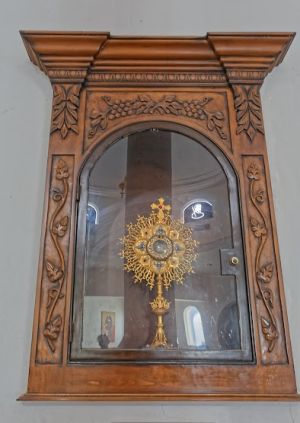
Relic of Saint Francis Xavier
Capilla de San Francisco - Magdalena de Kino
Non Insigni Relic of Saint Francis Xavier
In 1987 the Vatican sent to Magdalena de Kino, a non insigni relic of Saint Francis Xavier, one the founders of the Jesuit order and its first missionary. The relic is contained in the monstrance in the glass reliquarie. The relic is a non insigni relic or insignificant relic because it is a small part of the saint's body. A non insigni relic is a type of a former category called a first-class relic that the Vatican has no longer used since 2017. The relic in the monstrance is a small bone splinter from the clavicle of Xavier. The pilgrims arriving in the Capilla de San Francisco may venerate the relic as a means for connecting to Xavier's holiness for God's divine intercession in answer to their prayers, for instance, a prayer to heal an illness.